Working Today, Working in Context
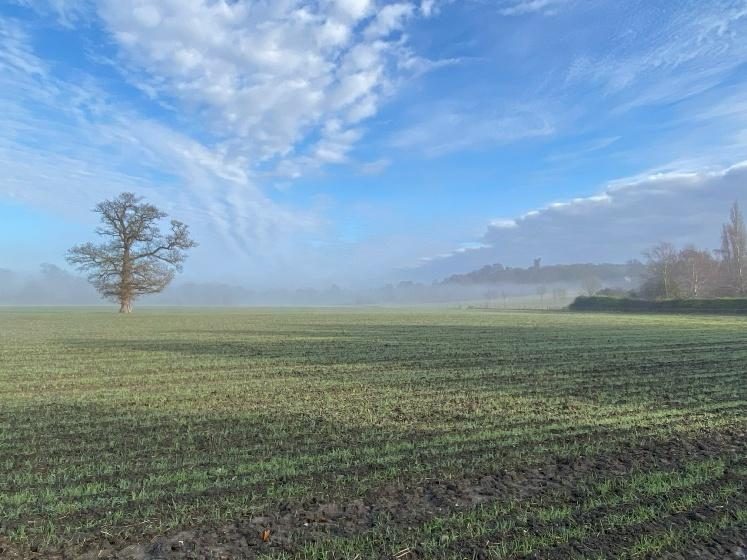
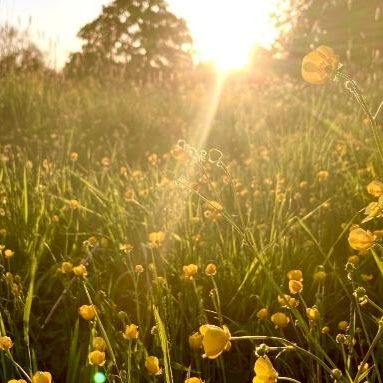
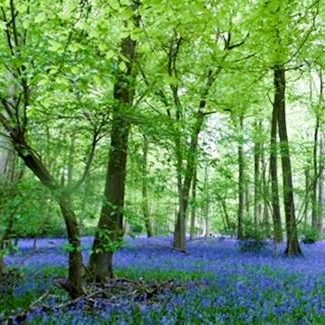
I work as a woodturner and artist in the beautiful countryside of Buckinghamshire, England. The county has a woodturning history that stretches back centuries, and its landscape, materials and traditions shape what I make. The beech woods, wildflower meadows and temperate climate of the Chilterns are not simply a geographical backdrop to my work; they are active collaborators. Turning, for me, is a way of responding to this environment and history - sometimes directly through material choice, sometimes abstracted through form and pattern.
Inheriting the Woodland Workshop
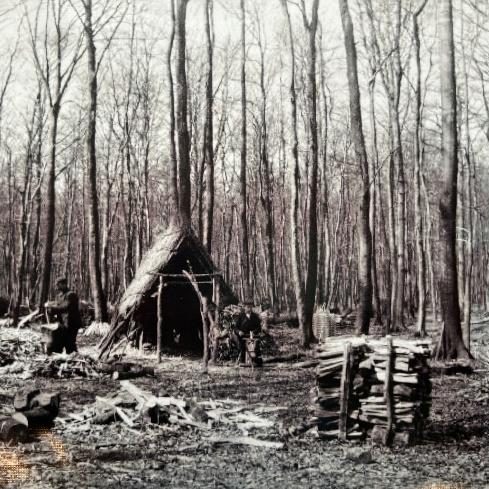
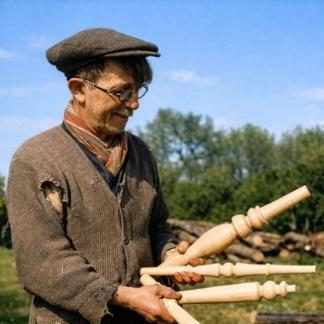
Historically, Buckinghamshire turners worked close to where the trees grew. The chair bodger set up camp in the woods. His rhythmic foot powered pole lathe was an efficient, responsive way of working with green wood. While few contemporary turners depend on this model for their livelihood, its influence remains strong. The oak and elm timbers of the 17th century cottage we are fortunate to live in were harvested locally, perhaps from the ancient woodland beside us. I aim to consciously echo the woodland workshop tradition by:
- Working with locally sourced or reclaimed timber, including imperfect or characterful material
- Allowing natural features in the timber to remain where they add meaning
- Incorporating traditional spindle turning and faceplate techniques and profiles in my work
- Treating process - not just outcome - as an integral part of the work
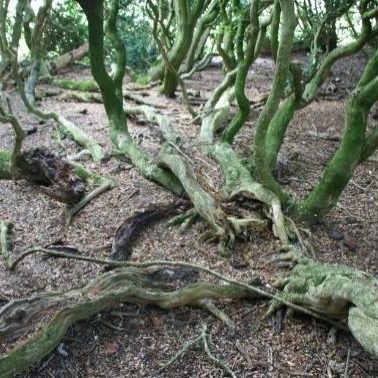
Even when I move into highly sculptural and ornamental work, that woodland mindset remains present. Precision sits alongside irregularity; control is balanced by responsiveness to what the wood allows. Ornamental work requires close grained timber, that grows slowly. Our cottage was once a small farmhouse in the Chequers estate, now the country house of Prime Ministers. The Hampden and Chequers estates were managed for orchards and box trees, both of which produce very fine-grained timber, as well as open grained beech for furniture, the ‘Buckinghamshire weed’. Veteran trees remain in small pockets, which we aim to support and regenerate through our woodland management. Today I manage an area of this woodland for wildlife and biodiversity, using traditional techniques such as coppicing and pollarding. We aim to think holistically about flora, fauna and fungi as a connected ecosystem, working in partnership with neighbouring landowners and farmers to protect the ancient woodland for generations to come during our custodianship. Small amounts of timber are produced as a by-product, that find a second life in my work.
In this way the woodland workshop survives - not as a fixed historical method, but as a mindset: working with what is available, listening to the material, and accepting impermanence.

From Function to Form
Traditional woodturning is rooted in function – in the past, everyone owned wooden items, ‘treen’, for everyday use. Chairs, wheels, tools and utensils were made to be robust and economical. The technique of turning was honed through repetition and use.
My art builds directly on this functional heritage, but I treat it as a starting point rather than a destination. Faceplate and spindle forms appear in my work not primarily as utilitarian elements, but as familiar references that can be stretched, layered or abstracted. Natural forms referencing the countryside around our cottage are given equal weight, evoking the feeling of living in harmony with nature which I hope people experience when they look at my work.
Ornamental turning allows me to take forms that originated in utility and give them a new expression, that values time, rhythm and visual complexity over speed. In doing so, the functional history of the object remains, even when use has been set aside in favour of making beautiful items whose value lies simply in bringing joy to their owners.
Technique as Language: Woodturning and Ornamental Turning
Buckinghamshire’s turning traditions emphasised speed, control and efficient use of material. Those same skills underpin my work today, but I treat them as a visual and conceptual language.
Conventional woodturning provides structure: symmetry around the stillness of the turning center, the relationship between form and grain. Ornamental turning introduces indexing, repetition, and mathematically derived patterns that slow the making process and shift attention to surface and light.
This balance is central to my practice. High quality turning sets the scene; ornamentation complements the underlying form. The juxtaposition between the honesty of turned wood and the precision of ornamental patterns reflect a continuing conversation between historic craft and contemporary practice.
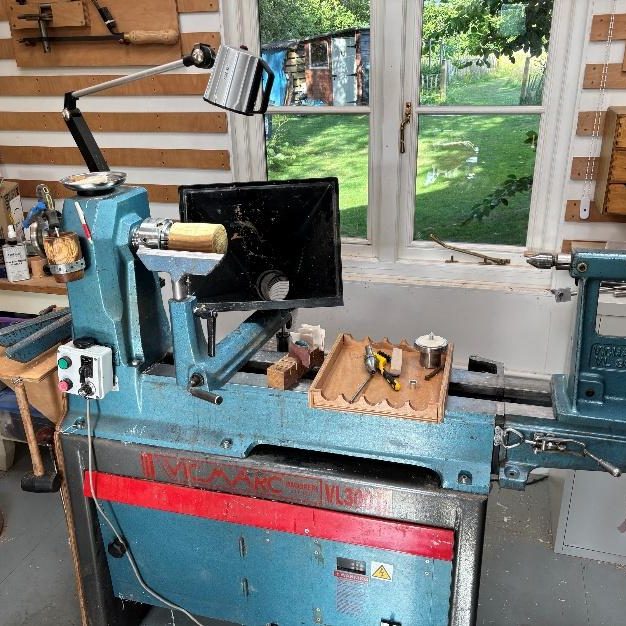
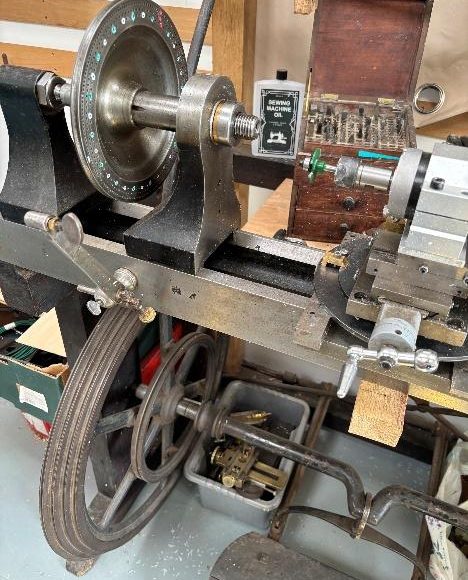
I use a combination of modern turning equipment and tools inherited from previous generations. I am fortunate to be the custodian of a Victorian ornamental lathe, a beautiful machine from a bygone age that the Society of Ornamental Turners helps me to keep in use, saved from the dusty museum store as a living piece of history.
Place, Memory and Material
IWorking in Buckinghamshire inevitably draws me into dialogue with local history. The very name Buckinghamshire is a toponym of Bece, the old English word for beech, and it is easy to see why when walking the copper leaved hills of the Ridgeway with my labrador Hobbes in the autumn. Beech carries specific associations with Windsor chairs and Chiltern furniture; repeated spindle elements recall communal labour and workshop production. Sometimes these references are explicit, sometimes they remain embedded quietly in proportion or material choice.
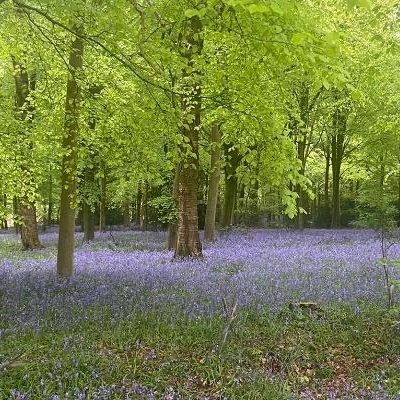
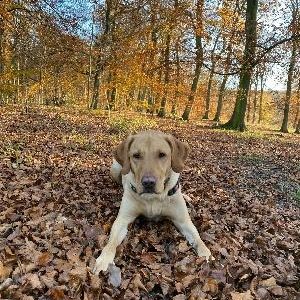
I am not attempting to reproduce historic objects. Instead, I treat wood as a material that remembers. Grain patterns, colour, voids and inclusions are records of the life of the tree. Ornamental turning, with its measured and systematic nature, provides a counterpoint to this organic memory—imposing order without fully suppressing the wood’s own narrative.
In this sense, contemporary woodturning aligns closely with wider craft and fine-art practice, while remaining grounded in highly traditional skills.
Craft, Community and Continuity
Buckinghamshire’s turning tradition has always been communal, with skills passed on through observation and shared work rather than formal instruction alone. That ethos continues today through clubs, demonstrations, exhibitions and organisations like the Worshipful Company of Turners and the Society of Ornamental Turners. I feel blessed to have met so many friends through these communities.
As a contemporary woodturner and ornamental turner, I see my role not just as a producer of objects, but as a participant in an ongoing tradition, forging new links in this ancient chain. Each piece contributes, in some small way, to the continuity of the craft - adding a present‑day voice to a long conversation.
Woodturning in Buckinghamshire is not a closed chapter. It remains a living practice, capable of supporting both utility and ornament, function and reflection. My work sits within that space: shaped by local history, informed by traditional skill, and extended through contemporary tools and ideas.