A new life for the Potterells Chestnut
When a tree has to be removed for safety, or has fallen where it cannot be left to return to the soil and support biodiversity, people often call me. I aim to use the timber to produce beautiful forms, treasured for years to come. The timber is imbued with the special meaning and connection to place that comes from knowing the story of the tree. By mindful attention to detail through each step of this long journey, the work becomes a celebration of the trees life, continued in a new form.
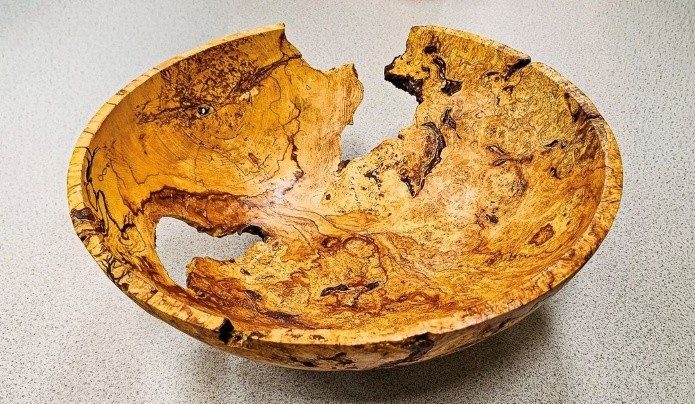
This large sculptural form shows a full range of voids, inclusions, burl and decay that speak of a long and challenging life. My part in the story began when I got a call from a close friend, to assist in the milling and seasoning of this remarkable golden timber, that I have turned and finished. However, the story began long before.
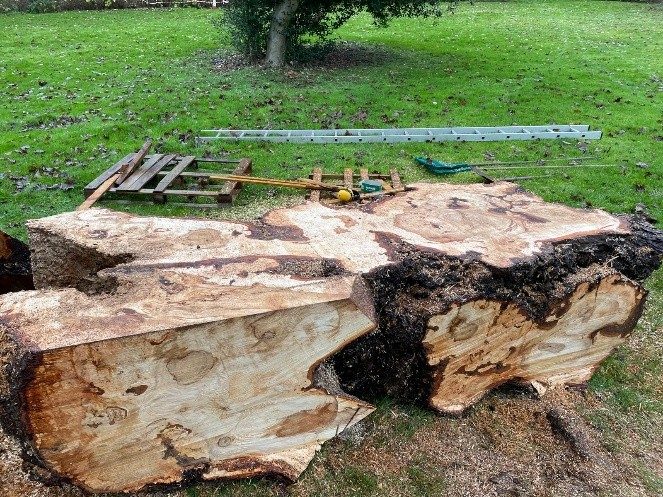
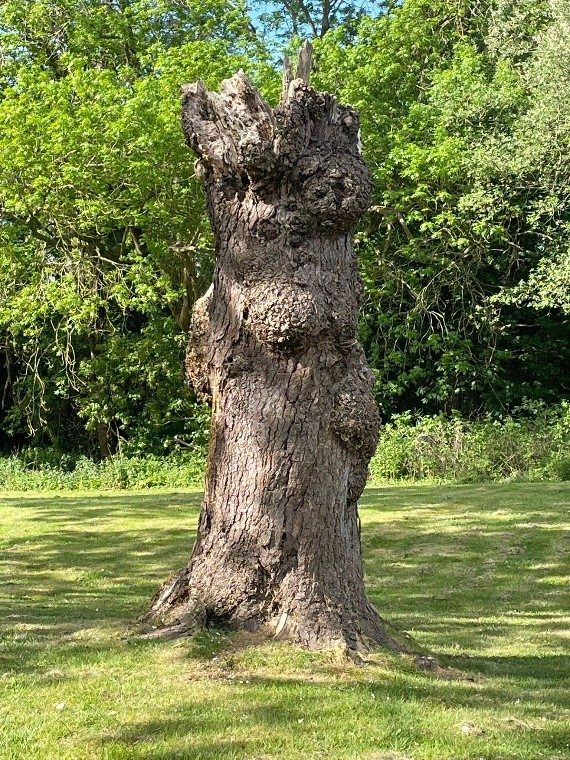
The magnificent horse chestnut had stood in the Potterells in rural Hertfordshire for hundreds of years, part of the grounds of a medieval manor that has long since vanished. During a typical English autumn, when the weather was breezy but not stormy, the top part of the tree collapsed with a huge crash, leaving a devastated ruin. The chestnut had, very unusually, snapped at about 12 feet up. The neighbours rallied round to help clear the brush. Huge amounts of firewood were barrowed to the log pile, and an enormous log was left. Well over 40” across, and it was decided that the timber from this significant tree deserved to live on.
Preparing the timber
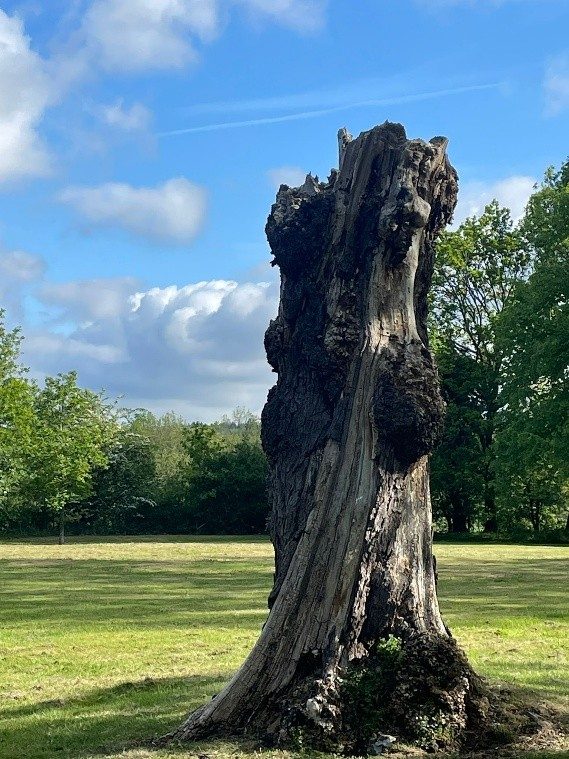
There was little indication before the chestnut fell that there was any rot in the main stem. It looked like a huge healthy tree. The stump now supports massive numbers of insects, fungi and animal life as it slowly decays and rots away.
We now know from milling the timber slice by slice that there was substantial internal rot and deadwood that could not support the weight of the crown.
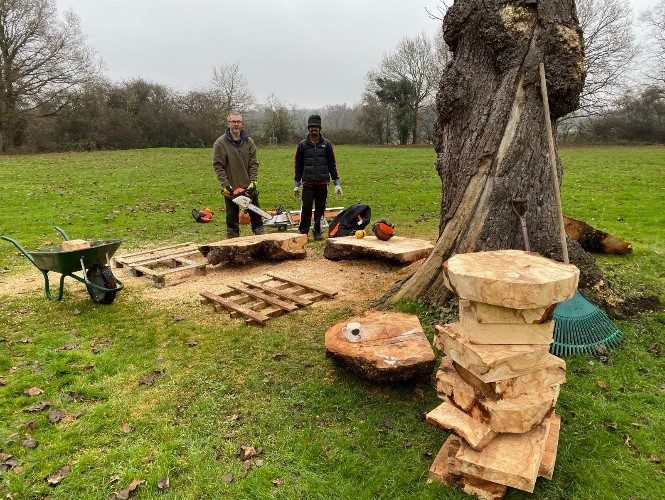
The trunk was so large that it had to be trimmed before milling. The bark inclusions, voids, punky areas and swirling grain were gradually revealed as milling progressed. We looked for the beautiful patterns made by nature, with an eye to featuring them in the final work, years hence. After this rough shaping, the timbers were air dried ‘on stick’, or rough turned, allowing the tensions in the timber to be gradually released as the moisture content equalised with its surroundings. From there it was transferred to the studio, where final turning, carving and finishing took place, some 5 years after the events that brought the timber to me. I hope that I have done it justice.